
Gun Control Explained With Its Pros And Cons
 Gun control is a hot topic all over the globe. People are busy debating about its pros and cons, no matter which part of the world. In the US there have been high numbers of death due to fire arms. With the increasing number of problems, now the public has started standing against the control of guns. There is an important call to look after the violence occurring all over the globe as the problem needs to be solved as soon as possible. The number of deaths is high and the control is very less. Hence, everybody should stand up for it.
Before passing a judgement about the topic, one must be aware of the pros and cons the action would be having. Gun control means inflicting a severe regulation on people possessing a fire arm. Many people believe that punishment for people owning and carrying arm would reduce the violence happening around in the world. However, there are many arguers to this belief. Possessing arms is the right of every American citizen as per the constitutional rights. The pros of gun control are that, it will reduce at least the number of gun related deaths. Gun possession is permitted for self defence purpose only.
However, out of all the accidents that takes place, hardly in 1% of them only the gun was used for that purpose. Usually people take advantage of this law to possess a gun for criminal activities only. Majority of murderers are always found with a licensed gun, hence the number of murders might reduce. Suicide count will also decrease. On the other hand, the illegal gun trade can increase. What is actually needed is, education about firearms so that people do not use it for other purposes. A strong defence option will be taken away from people.
Read also: Do Not Let Any Kind Of Politics Ruin Your Relationship
The Amazing Idea Of Wall Street Trades
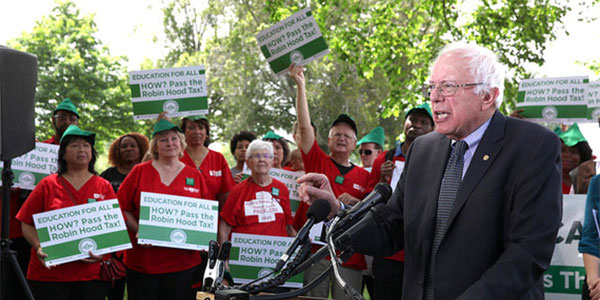 Bernie Sander suggested a wonderful proposal, though it did not receive much attention, it should be discussed among people. Hillary Clinton can use it for her campaign. Putting a small tax on financial transactions could change many things. For instance, it would reduce the incentives for insider deal making, high speed trading and short term financial betting. Buying and selling of stocks for beating other competitors often leads to waste of resources. Why to put nation’s brightest minds behind something unnecessarily risky. Tax on financial transactions can help generate lots of revenue. Financial experts say, even a 1% transaction tax would lead to a $185 billion in just 10 years.
Hence, it would support public investment and enlarge the economic pie. Investments would include better access to colleges and schools. This tax will be fair enough as the Wall Street traders who pay no tax on the stocks and bonds they buy will also have to pay for it. They make up for 30% profit of America, but pay only 18% of corporate taxes. The percentage needs to be balanced out. Wall Street’s objection to the said tax is completely foolish. For several decades the UK was attacked on stock trades.
Still, the UK stands as one of the financial powerhouses of the world. There the tax raised through financial taxes is around 3 billion per year. For a economy like that of the US the compared amount would yield around 30 billion a year which is a huge amount. These kinds of taxes have helped Britain to a great extent in sustaining their budget. European Union is on its way to implementing such tax and many other countries already have one such tax. Hence, it can be a great help if the Wall Street trades are also taxable from now onwards.
Read also: Politics Inside A Classroom Must Be With-In Limits
Why The 2016 Elections Can Affect The Entire World?
 When talking about conventional wisdom, both the parties will be ranked at the same position. The foreign policy understanding is more or less similar with them. However, if the Labour party prevails four differences might take place in the policy. These changes can largely affect the way Australia deals with the rest of the world. Hence, it is important to understand the change in policies that the party wants to introduce. Labour party has pledged to open up about the sea boundary wit East Timor, which would establish the ownership of the gas and oil deposits underwater. The background of this policy is quite complex though.
However, the coalition refused for the policy change as East Trimor already has a good deal. Its 90% of the revenue comes from one area and the rest from a 50-50 split area. It is known as the Greater Sunrise field which is claimed to be in its territory, by Australia. The deadlock has become very intense in Australia. No minister from Australia has visited East Timor since the coalition was voted for. Now, East Timor has dragged Australia to the UN featuring an attempt to broker a deal with them. The anger between the two countries has given rise to a poisoned relation.
The matter is however a legal concern now. Australia must open up about talks with East Timor. Indonesia also shares a boundary with Australia and has always remained in its support. It is being watched whether Indonesia seizes on this precedent or not. For the negotiation to be held, many countries have agreed for support voluntarily. Australia along with other US allies have resisted from the negotiation. The ban passed by the coalition is emotionally appealing but is impractical at the same time. Currently Labour is echoing for a two states solution of the conflict, the future results are still not clear.
Read also: The Biggest Of All Marijuana Policy Reforms




Touch with me